


Classifying Spare Parts to Power Smarter Preventive Maintenance
This article was written in collaboration with Research Engineer Enzo Pinho Fernandes of the Industry 5.0 Lab within Berger-Levrault’s BL Research team. Introduction A single missing bolt can stop an entire production line. When this happens, the cost is not only the price of the part, but also the production time lost during the stoppage, which is often far higher than the part itself. The opposite problem is just as

Airflow: feedback on BL.Predict and Foundation use cases
Introduction In a context where the automation of data workflows has become a fundamental pillar of project reliability and scalability, Apache Airflow has established itself as an essential tool within the technical ecosystem of our BL Research team, dedicated to Research and Technological Innovation at Berger-Levrault. Whether orchestrating text document processing chains or driving transformations

Applying Agentic AI towards enabling computerized maintenance management systems
In the critical domain of Computerized Maintenance Management Systems (CMMS), solutions like CARL Source empower businesses to efficiently create, schedule, and manage maintenance tasks. These platforms are widely used to coordinate work orders for repairing industrial machinery across multiple factories worldwide. *Update: Coruscant is the name given internally to this R&D project. The commercial name

Enhancing Domain-Specific RAG Applications through Synthetic Fine-Tuning
Keywords: Synthetic Data, Retrieval-Augmented Generation (RAG), Small Language Models (7B LLM), Large Language Models (LLM like GPT-4o or GPT4.5), Model Adaptation, Efficient Model Tuning, Low-Resource Fine-Tuning, Synthetic Fine-Tuning. 1. Introduction In the context of our Research & Innovation efforts at Berger-Levrault, we are exploring how large language models (LLMs) can enhance customer support through intelligent,
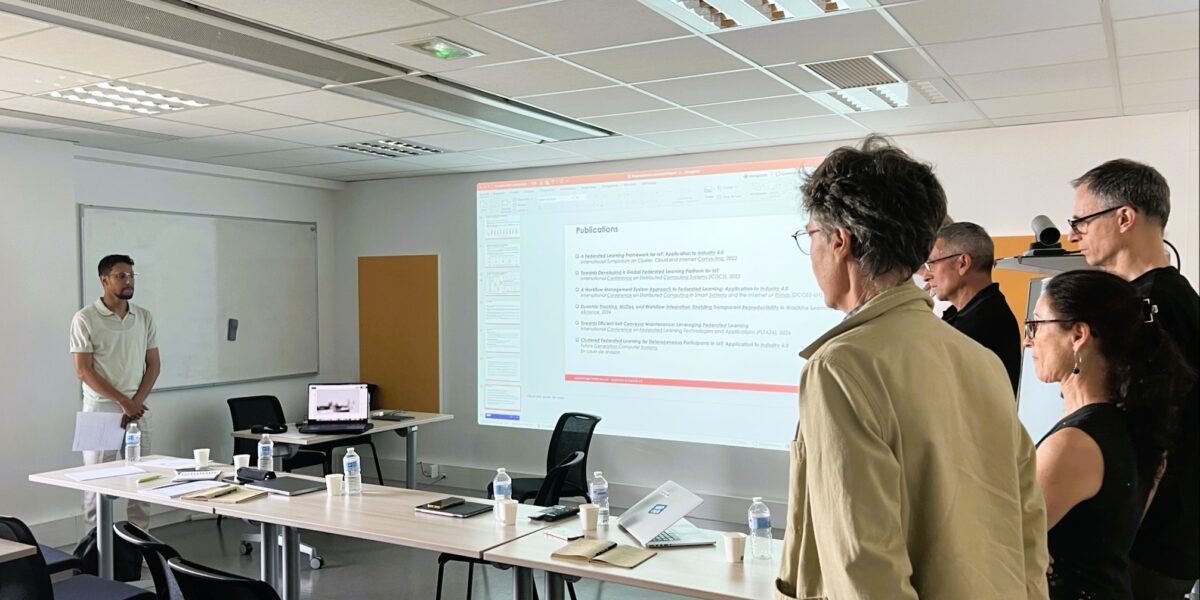
Hamza Safri Ph.D. thesis defense: “Federated learning for the IoT : Application for Industry 4.0”
Thuesday 24th June at 3pm Paris time, Hamza Safri, Ph.D. Candidate has defended his thesis named “Federated learning for the IoT: Application for Industry 4.0”. His thesis defense took place at the Inria Minatec Grenoble, Grenoble, France. Take a look at the summary below. Keywords: Model generalization, predictive maintenance, industrial IoT, federated learning, edge network,
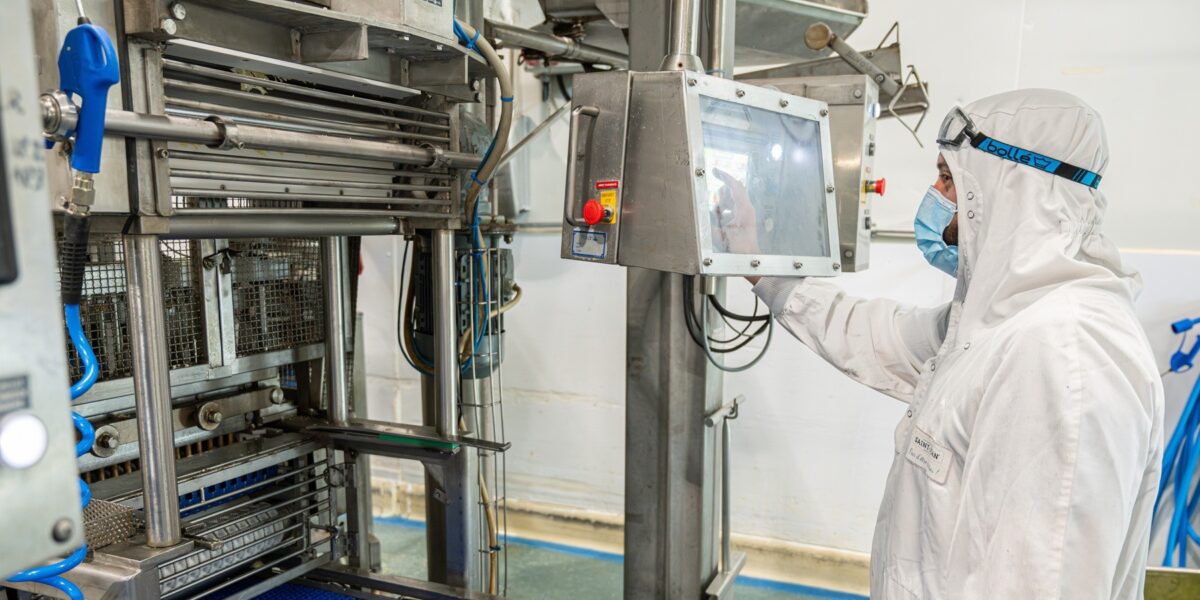
Success Story BL.Predict x Saint Jean: challenges and benefits of switching from corrective to preventive maintenance
Success Story BL.Predict x Saint Jean! The objective? Optimize the maintenance of its fresh pasta production! Production line availability, data centralization, migration from corrective to preventive maintenance… Here’s a look back at this collaboration which combines technological innovation and complex manufacturing systems. La “Maison” Saint Jean, the art of fresh French pasta History shows that

New White Paper – AI for maintenance! Challenges, Opportunities and Case Studies
How is artificial intelligence transforming maintenance practices today? What are the concrete opportunities for equipment, infrastructure and fleet managers? The new white paper published by CARL Berger-Levrault offers a rich and accessible insight into these strategic questions. Entitled “AI at the service of maintenance: challenges, opportunities and case studies”, this document summarizes experience in the

Towards a Human-Like Evaluation: Innovations, Applications, and Future Directions
In his previous article, Romain explored the theoretical foundations and methods dedicated to the automatic evaluation of artificial intelligence systems, emphasizing the importance of making them more human and intuitive. This article continues this reflection by focusing on the practical applications of these advances. How are these innovations deployed? What challenges do they face? What

New White Paper – Agentic AI, a Software and Societal Revolution!
Research at Berger-Levrault is tackling a new frontier in artificial intelligence: that of (partially) autonomous agents capable of reasoning, planning, collaborating, orchestrating and learning in complex business environments. Our new white paper, “Beyond automation – How agentic AI is transforming the software industry”, shares with you an in-depth analysis of this ongoing technological revolution, its

Re.Optim: Responding dynamically to changes and unforeseen events in schedules generated by BL.Optim
BL.Optim: A cutting-edge but static planning optimization tool BL.Optim is our optimization engine for routing and scheduling, used to generate efficient planning under complex constraints. While highly flexible, it currently operates as a static solver: schedules are generated once, based on a submitted problem, and cannot be adapted without full recomputation. When plans need to
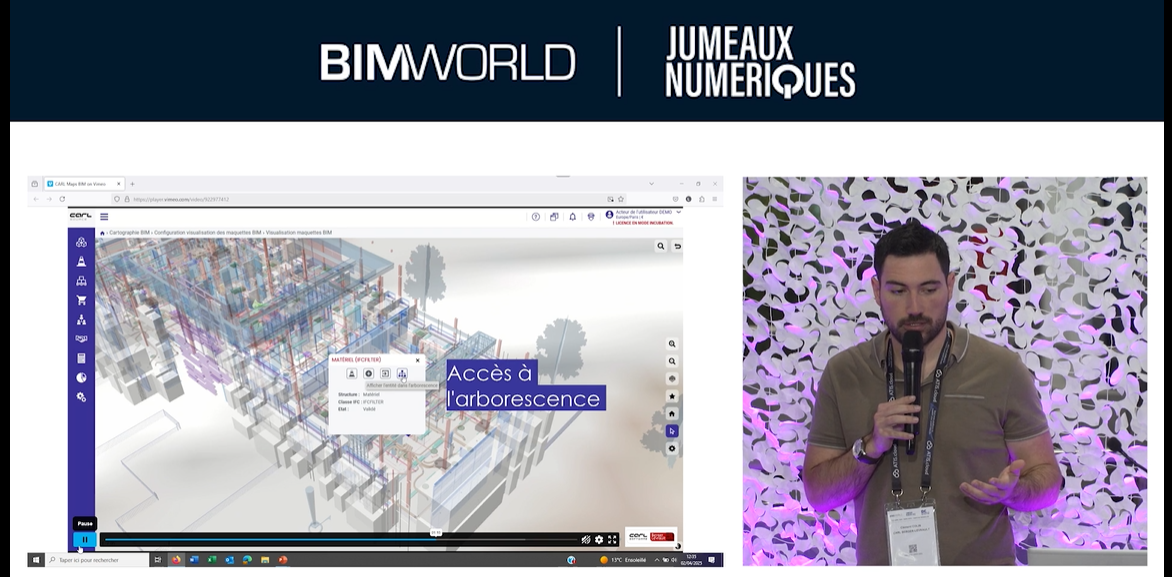
Clément talks at BIM World 2025 on the future of augmented maintenance using BIM models
At BIM World 2025, held in Paris on April 2-3, Clément Colin, our research engineer in BL Research team, spoke at a workshop dedicated to Digital Twins, alongside Laurent Truscello, Product Marketing Manager at Carl Berger-Levrault. The theme of their talk: “GEM & GMAO – Valuing and increasing the use of your BIM models for