

Classifying Spare Parts to Power Smarter Preventive Maintenance
This article was written in collaboration with Research Engineer Enzo Pinho Fernandes of the Industry 5.0 Lab within Berger-Levrault’s BL Research team. Introduction A single missing bolt can stop an entire production line. When this happens, the cost is not only the price of the part, but also the production time lost during the stoppage, which is often far higher than the part itself. The opposite problem is just as
CARL – What if maintenance requests were automated?
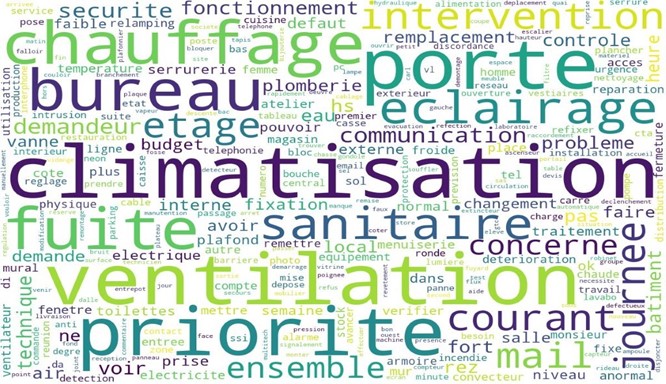
CARL Source is CARL Software’s main software application for managing maintenance processes within the company, as well as the historical monitoring of the various materials and equipment, buildings, and necessary interventions. We conducted a study involving Natural Language Processing techniques for document understanding and qualification. Basically, we aim at interpreting real requests for intervention, to

Accounting & Robots : A Love Affair
During the past months, Berger-Levrault and the Cusma association worked together within the newly created innovation commission. This comission aimed at co-designing new and innovative services involving for exemple robotic process automation (which we have recently talked and explained on BL.Research), artificial intelligence and natural language processing. The use RPA for automatic accounting checking was

PowerBuilder 12.5 goes to the Web!
A few months ago, Berger Levrault’s research team published an article on the result of an experiment allowing a JAVA application to work together with a Visual Basic 6 application. This work showed that you could use business components developed in Visual Basic 6 from JAVA and even “run” an entire application without having to
Augmented Reality in HealthCare
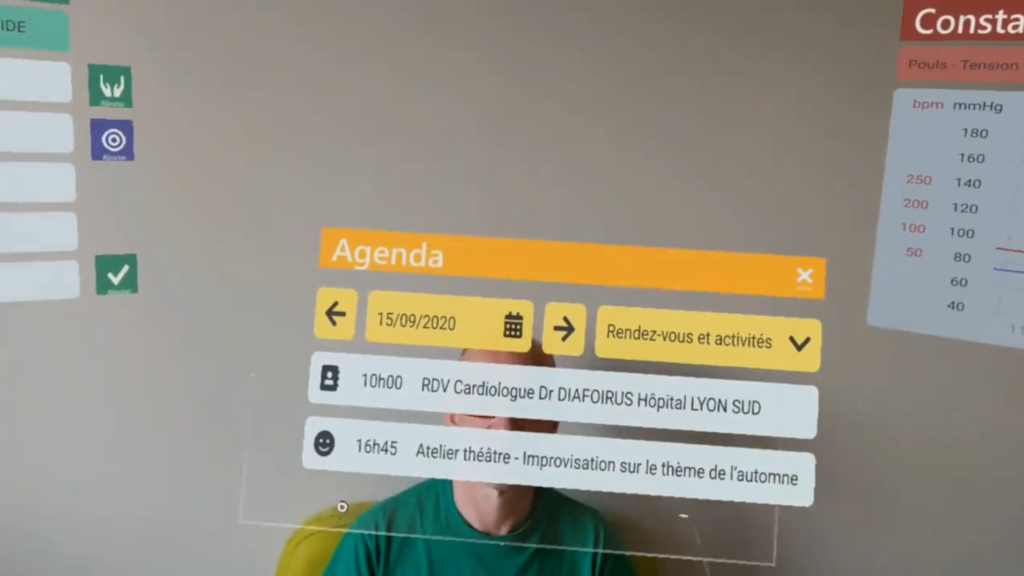
This week we responded to a call for projects from the ANS (French Digital Health Agency calls Structure 3.0. We proposed a totally new approach to interact with BL.soins, based on Microsoft Hololens and augmented reality techniques.The project aims at experimenting with augmented reality, its value, and acceptance in health care for older adults. But

The SoftScanner project: How to trace your front-end automatically?
Following the cooperation of three institutions: the University of Montpellier, the Centre National de Recherche Scientifique, and the Berger-Levrault company, the SoftScanner project is now underway. SoftScanner is a Model-Driven Approach for the Automatic Generation of Optimal Anchoring Configurations for Software System Execution Tracing Operations. Context and Problem Developers write “logging instructions” in the source
Why your Interoperability needs to be monitored
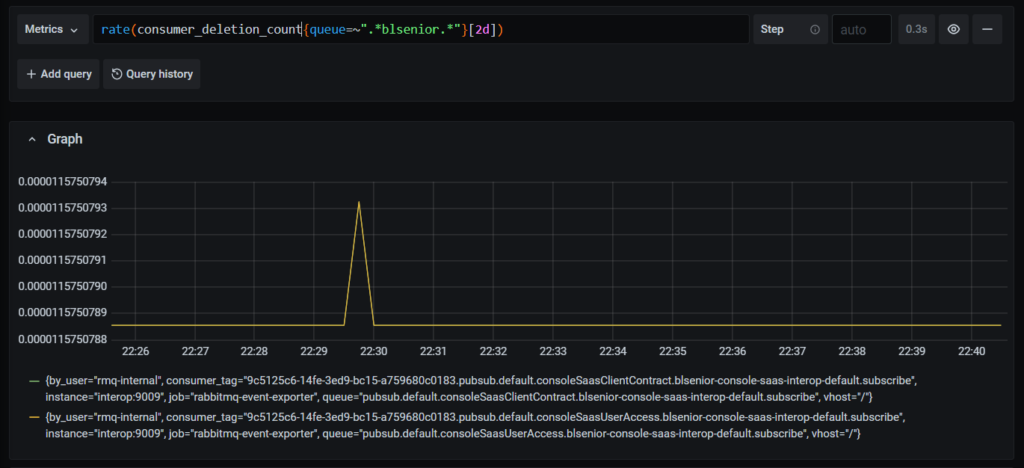
BL MOM and RabbitMQ Interoperability is one of the key challenges for enterprise information systems engineering. The lack of interoperability among applications and their sub-systems is a critical issue that can affect the overall quality of service. Data interoperability is implemented through data transport and exchange systems, the latter must be reliable and secure to
Building an Ontological Knowledge Base from Berger Levrault Editorial database
Context Ontologies are widely used in information retrieval (IR), Questions/Answers, and decision support systems, and have gained recognition as they are now being considered the new answer to semantic interoperability in modern computer systems and the next big solution for knowledge representation. The structuring and management of knowledge are at the heart of the concerns

Scientific paper accepted at the QUATIC 2020 conference
A few weeks ago, 3 DRI engineers had their paper accepted in the QUATIC 2020 conference. QUATIC 2020 is the 13th conference on the Quality of Information and Communications Technology, which will take place on September 8-11, 2020. The selected paper is about: “Challenges for Layout Validation: Lessons Learned”. As part of Berger Levrault’s program

Adaptative Maintenance: CARL’S IoT Platform
In 2016, industrial customers have asked us about our vision of the industry of the future, and in particular the maintenance function.We set up a working group including 3 major industrial accounts to study the impact of the Plant 4.0 concept on maintenance: digital tools, organization, skills, new business models, and confidence in digital technology.After
DevOps & Middleware: a new project to facilitate the management of our deployments and enhance their reliability
A new collaboration project has been initiated with the team Spirals of INRIA Lille laboratory. In this project, we want to address the steering, orchestration, and maintenance mechanisms for our applications’ packaging, delivery, and deployment activities. The lack of formalization and traceability on the actions that are carried out for the deployment of our applications,