
BL-Viz4D: A Digital Twin viewer for Maintenance
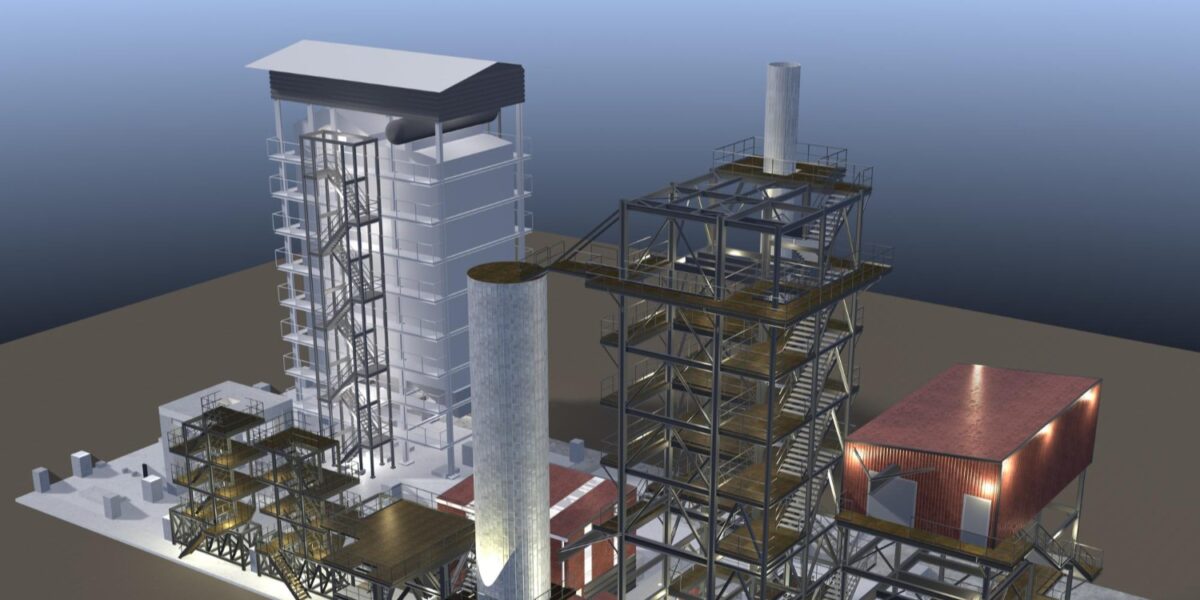
BL-VIZ4D is a research project led by Berger-Levrault, dedicated to the visualization, synchronization, and interaction with digital twins applied to maintenance. Stemming from thesis work conducted in partnership with the LIRIS laboratory (Laboratory of Image Informatics and Information Systems), BL-VIZ4D explores the scientific and technological foundations of a multi-scale 3D viewer capable of aggregating heterogeneous geospatial data—attribute, 2D, and 3D—and linking it to CMMS business processes. The viewer allows for
Equipment 3D visualization in a CMMS application-2nd part
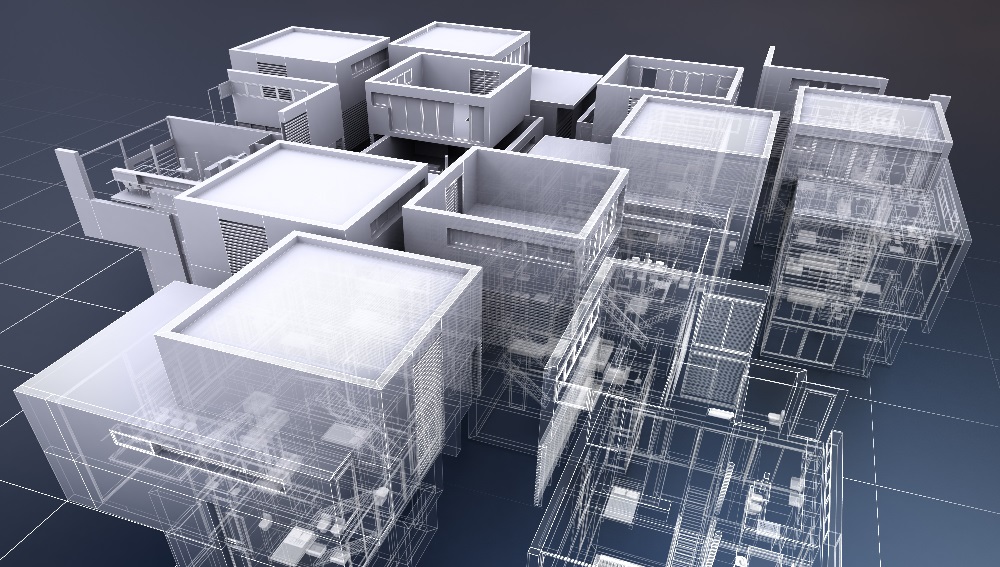
Find the first part of this article by following this link Navigation in the context of a CMMS asset using geometric and semantic data Our goal is to provide the user contextual views of an asset, thus to allow him to visualize the asset at different scale or using the many asset representations to answer
Our joint team Evref – Berger-Levrault/Inria
Berger-Levrault embarked on an exciting journey in 2023 by establishing a joint research team with the Inria research laboratory and the CRIStAL laboratory of the University of Lille. Named Evref, this collaboration marks a significant milestone in Berger-Levrault’s pursuit of advancing software comprehension and modernization. Evref: A Giant Leap Towards Software Understanding Evref is not

What are the evolutions of this law? Between abstraction and hallucination in the field of the summary of legal texts
Context Legal monitoring is a crucial activity for legal experts in order to remain in phase with legal news. It allows them to be permanently aware of current regulations and to anticipate their future evolutions, in order to apply them as soon as possible. However, with the constant inflation of legislation, the watchdogs themselves experience

Balancing the satisfaction of stakeholders in home health care coordination: a novel OptaPlanner CSP model
As part of the development of the innovative BL.Optim solution, we questioned the concept of route optimization for home health care coordination. We are pleased to inform you that this research and innovation work has recently resulted in a scientific publication in the journal Health Systems, that brings together critical research and commentary on health

Simulation and analysis of disruptive events on BL.Optim-HHCRSP solution
The world demographic trend will be driven by a significant increase in the number of people over 60 years of age (60% increase in the next 40 years), with a life expectancy that is expected to rise. In this context, the demand of home-based support for independent elderly people is increasing sharply. This highlights the

BL.Formation: helping HR managers aggregating similar requests to build the municipalities’ training plan
The goal of BL.Formation Each year, territorial agents can claim training courses and their managers can also ask for trainings for the department. In medium to large municipalities, these requests are sent to the training managers in the HR department. There can be a significant amount of training requests to compile and classify. Training managers

Neolink: Lifelong pathway co-construction
While personal coach applications are now ubiquitous, personal lifelong pathway co-construction is largely overlooked, although present for e-learning, healthcare, return to employment, home-care of elders, etc. Modeling generic lifelong pathway co-construction is feasible since these situations share many properties. We contribute to the problematics with a generic model for the co-construction of lifelong pathways applicable

Yassine Bel Ghaddar Ph.D. thesis defense : “Data fusion for urban network mapping: application to wastewater networks”
Tuesday 13th of December at 9h30 a.m. Paris time, Yassine Bel Ghaddar, Ph.D. Candidate will defend his thesis named “Data fusion for urban network mapping: application to wastewater networks”. His thesis defense will take place at the conference room of the Faculty of science and technologies in Fez, Morocco. This thesis is a CIFRE-France-Morocco collaboration

Beginning of maintenance 4.0 project at SIAAP
SIAAP, the public reference for wastewater treatment in the Ile-de-France region, embarked in 2016 on the design of a long-term strategic plan: SIAAP 2030. It aims to implement a medium-term conditional and predictive maintenance strategy. Among the challenges pursued: improving the maintenance of its industrial equipment, in particular the real-time monitoring and diagnosis of critical

Solving optimization problem through the Domain-Specific Language based businesse rules modeler
BL.Optim is a research project of Berger-Levrault about planning management through optimization algorithm. However, the “constraints description” part in BL.Optim is supported by an API, which is extremely difficult to use to express new constraints. We want to replace the constraint descriptor by using a language more or less expressive, which allow us to easily